
Founder-led GTM works because the founder carries the full context behind the company, the product, the market, and the customer pain. The founder knows why the company exists, why the product was built, what tradeoffs were made, which customer problems mattered most, and why the solution should matter now. The challenge is that most of that context is never formally captured. It lives in the founder’s head, on sales calls, in customer conversations, and in the way they explain the product when the stakes are high.
That is useful for a while.
It can even be a superpower.
But eventually, the company needs more than a founder who can explain the product well. It needs a team that can carry the story without the founder being in every room.
The goal is not to replace the founder’s story.
The goal is to capture the parts of it that can scale.
The founder has an unfair advantage
Founders often sell differently because they have context the rest of the company does not have.
They remember the original pain.
They know why the company was started.
They know what was frustrating about the old way.
They know why certain features exist.
They know which customer conversations shaped the roadmap.
They know where the product is strong, where it is still maturing, and where the market is misunderstanding the category.
In some cases, the founder used to be the problem owner. They were the practitioner, executive, engineer, operator, or buyer who lived with the problem before deciding to build something better.
That gives them a different kind of credibility.
They are not just describing a feature.
They are remembering the pain stimulus that created the solution.
That is hard to fake, and it is easy to lose when the story gets handed to the rest of the company as a deck, a script, or a product one-pager.
The story gets weaker when the pain gets removed
A lot of founder-led sales stories lose their power when they are translated poorly.
The product facts may remain accurate. The slides may look better. The launch copy may sound cleaner. The demo may be more consistent.
But something important disappears.
The pain-to-solution connection gets sanitized.
The emotional connective tissue gets stripped out.
The founder’s original explanation might have been messy, but it carried weight because it tied the buyer’s current frustration to the reason the product exists. It made the prospect feel seen. It connected the product to the problem in a way that felt specific and lived-in.
When that gets reduced to clinical sales language, the story can become technically correct and emotionally flat.
That matters because buyers do not usually act because a feature exists.
They act because the feature helps them solve something they care about.
The founder often knows how to make that connection because they have lived close to the pain. The company has to capture that connection before it gets polished into something forgettable.
Capture all the whys
The best place to start is with the whys.
Why does this problem matter?
Why did we build this product?
Why did we prioritize this workflow?
Why did this customer care?
Why did they buy?
Why did they hesitate?
Why did the founder explain it that way?
Why did that example land?
Why did that objection come up?
Why did the demo change the tone of the call?
Act like you are going for big points in Scrabble, and you do not want to leave a single Y for anyone else.
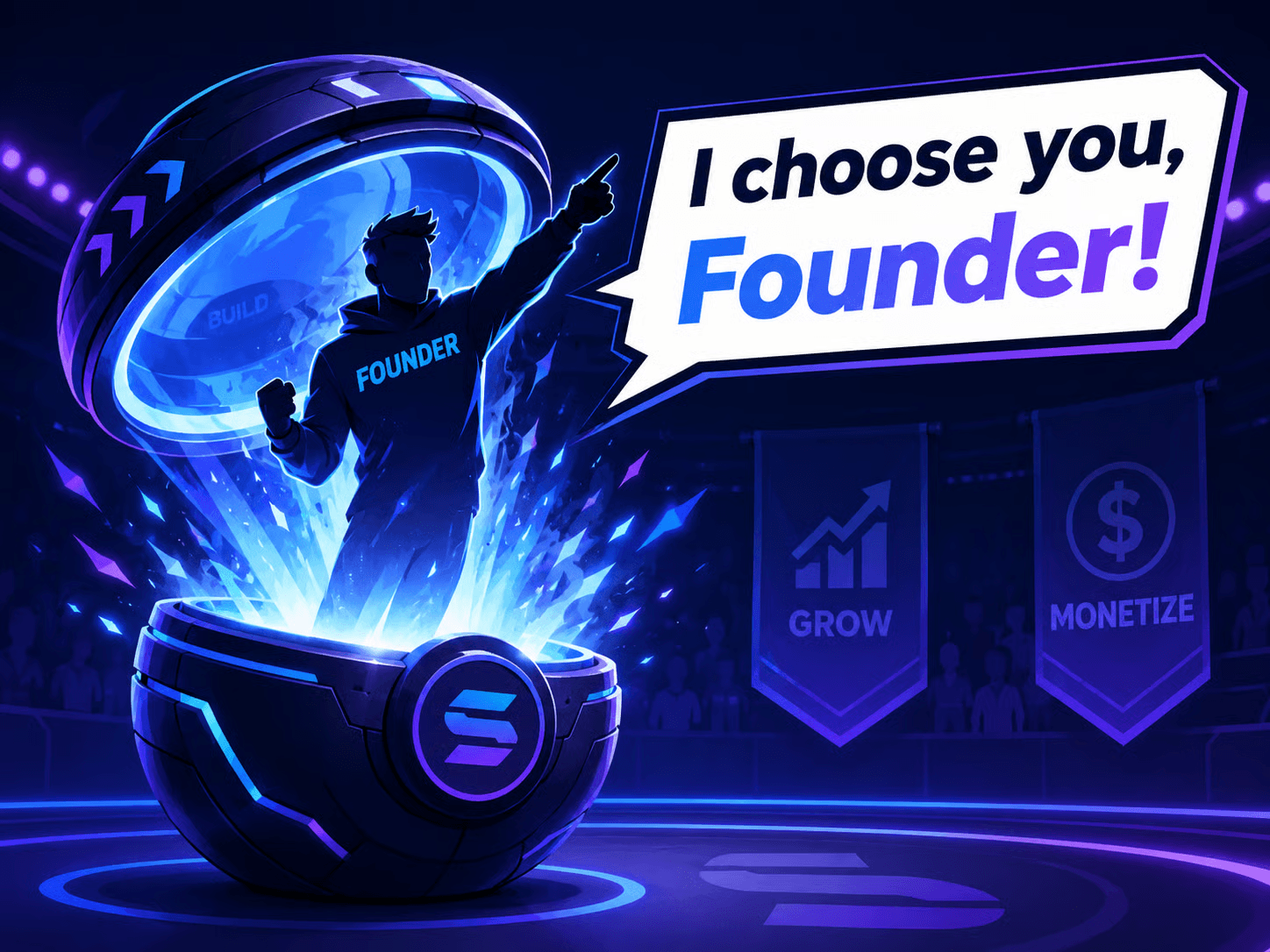
Put on your fingerless gloves and get ready to be Ash Ketchum.
Catch them all.
That may sound ridiculous, but it is actually the work. Founder-led GTM is full of hidden whys, and those whys are often more valuable than the polished statements that make it into the official deck.
The company should not just capture what the founder says.
It should capture why the founder says it.
That is where the repeatable value usually lives.
Do not try to clone the founder
The trick is not to make everyone sound like the founder.
That usually fails.
Founders have their own charisma, personality, history, confidence, and style. Some of that belongs only to them, and trying to imitate it can make the rest of the team sound unnatural.
The better goal is to separate founder personality from founder translation.
Founder personality might be the specific way they tell a story, use humor, challenge a buyer, or bring energy to a room. That can stay theirs.
Founder translation is different.
That is the part where they connect product truth to buyer pain. It is the part where they explain why a feature matters in the customer’s world. It is the part where they turn a technical decision into a business implication. It is the part where they know which detail to emphasize and which one to skip.
That can be captured.
That can be taught.
That can be put into other people’s voices.
A great sales rep should not sound like the founder. A great sales rep should be able to carry the same value logic in their own voice.
That is the difference between mimicry and transfer.
Look for the moments that landed
A founder-led call will usually have signals that tell you which parts of the story are worth capturing.
A customer repeats something back.
They nod.
They ask a follow-up question.
They bring another stakeholder into the conversation.
They turn a concept into a next action.
They put the topic on the agenda for the next meeting.
They shift from passive listening to active participation.
Those moments matter.
They are not just nice reactions. They are clues.
Something landed.
Maybe the founder named the pain correctly. Maybe they framed the business value in a way the buyer had not heard before. Maybe they explained a technical detail just enough to build trust without overwhelming the conversation. Maybe they made the problem feel urgent. Maybe they helped the buyer justify the next step.
Those are GTM assets.
They should not disappear into a call recording folder.
Call transcripts are not enough
It is tempting to think this problem can be solved by recording calls and summarizing them.
That helps, but it is not enough.
A transcript captures words.
It does not automatically capture judgment.
It does not tell you which moment changed the conversation, which example created trust, which detail was unnecessary, or which part of the founder’s explanation should become a field story, demo moment, objection response, partner narrative, or executive frame.
The useful work happens after the call.
Someone has to look at the conversation and ask:
Where did the buyer lean in?
Where did they get confused?
Where did the founder translate something technical into something useful?
Where did the conversation move from interest to action?
Where did the founder say something that should become part of the company’s GTM system?
That is how founder-led sales calls become repeatable assets instead of archived recordings.
A simple exercise: review three founder-led calls
A company can start capturing the founder’s sales story this week.
Take three recent sales calls or customer conversations where the founder was involved.
For each call, list the topics and themes that came up. Do not overcomplicate it. Just capture what was actually discussed.
Then sit down in your favorite Venn-diagram-drawing location and draw the Venn diagram.
What came up in one call?
What came up in two calls?
What came up in all three?
Anything that came up in two calls is probably coming up multiple times for a reason.
Anything that came up in all three should almost certainly be captured.
That repeated material may point to buyer pain, market confusion, a recurring objection, a demo moment, a product truth, a business value message, or an executive justification that the company needs to make more intentional.
The goal is not to turn every founder phrase into official messaging.
The goal is to find the parts of the founder’s story that are already doing work.
Turn founder instincts into company assets
Once the repeated themes are identified, the next step is to turn them into assets the rest of the team can actually use.
That might mean:
·a better opening narrative
·a buyer-pain map
·a product-to-value messaging matrix
·a sharper demo flow
·a list of common objections and better responses
·a partner trigger guide
·a set of customer proof points
·an executive narrative
·a field talk track
·a launch story
·a clearer “why now” message
This is where founder-led GTM starts to become repeatable.
Not because the founder stops mattering.
Because the founder’s best thinking is no longer trapped in live conversations.
Founders have the unfair advantage of tying the creation of the company, the development of the product, and the company’s prioritization to their storytelling. That advantage cannot be fully cloned.
But it can be harvested.
And once it is harvested, the company can start building an intentional advantage of its own.
The founder’s brain is source material, not the system
In early GTM, the founder’s brain is often the system.
That is normal.
It may even be necessary.
But it cannot stay that way forever.
If the founder is the only person who can explain the pain, defend the product, tell the origin story, handle the objection, connect the feature to value, and make the buyer believe, then the company has not yet built a repeatable GTM motion.
It has a very talented bottleneck.
The next step is not to remove the founder from the story.
The next step is to make the story strong enough that others can carry it.
That requires capturing the whys, the examples, the proof points, the emotional connection, the buyer language, and the moments where prospects start to care.
That is the work.
Want help turning founder-led GTM into something the team can carry?
Production Ready helps technical companies capture the founder’s sales story and turn it into buyer-ready messaging, demo flow, field stories, partner enablement, and executive narrative.
The goal is not to make everyone sound like the founder.
The goal is to give the company a repeatable GTM system that carries the same product truth, buyer context, and value logic without needing the founder in every room.
Schedule a 30-minute fit call: https://calendar.app.google/7whsjgVTFPQNQ7oE6